



What we delivered
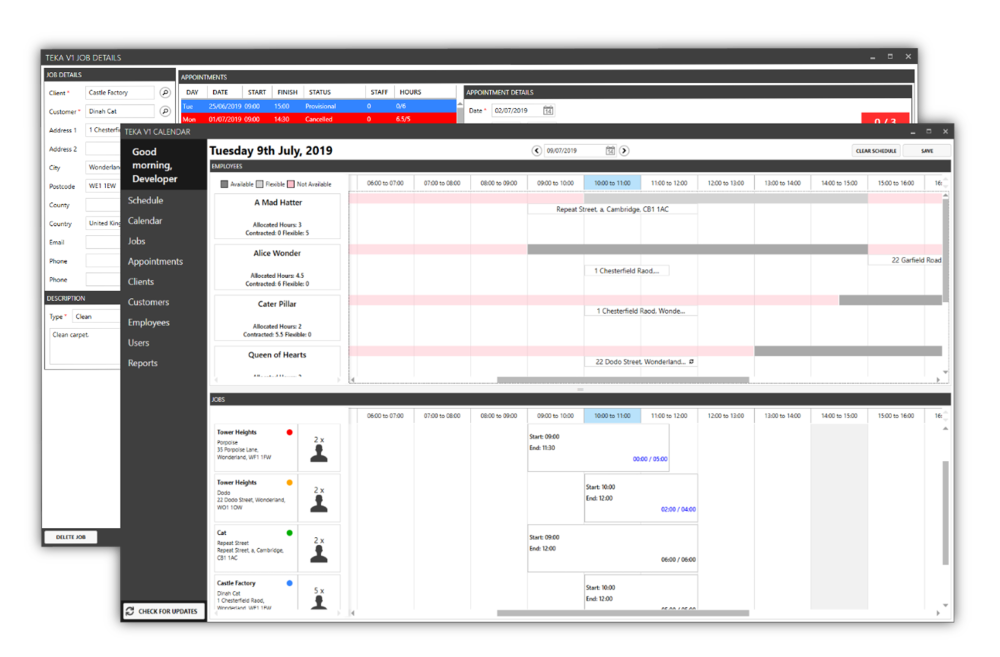
It was decided that a desktop application would be the ideal solution for TEKA Services, as it would not be used by customers and could easily be installed on the relevant office machines. As many jobs were repeated at regular intervals, it was very important to the owner of TEKA Services that staff would not have to add each future appointment individually. Therefore, we provided users with the ability to state the interval for repeat appointments and how many repetitions were required, so the system could automatically add them to the database.
Automatic calculations were carried out and displayed as users entered data, so they could see instantly when appointments were fully booked; how many employees would be working on the job and how many hours still needed to be allocated. The system also held details of each job, warned users when they had not allowed enough travel time and provided different views of the same data, including a calendar and scheduler.
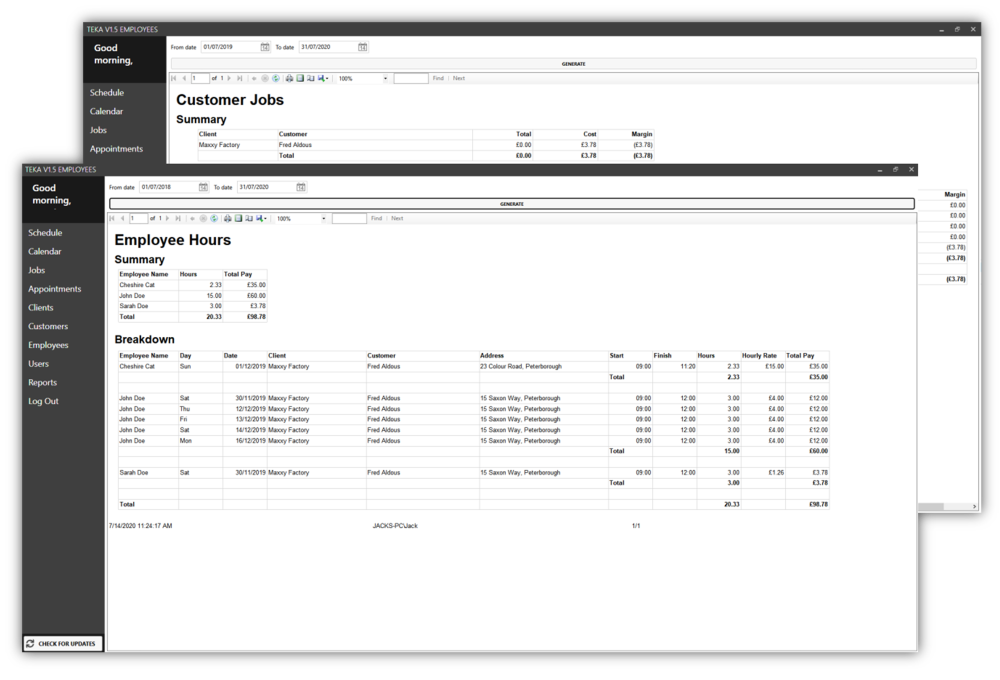
Reports were available so that management could have an overview of the financials for each job and how much each employee should be paid, without the need to get their calculator out, at the end of the month.
The Results
TEKA Services office staff found that scheduling work was more efficient and less error prone than prior to having their new software solution. They found that they were able to see who was booked on what job and when, by using the different views of the data. The ability to automatically create a schedule for an employee and email it to that employee, via the system was also of great benefit to them.
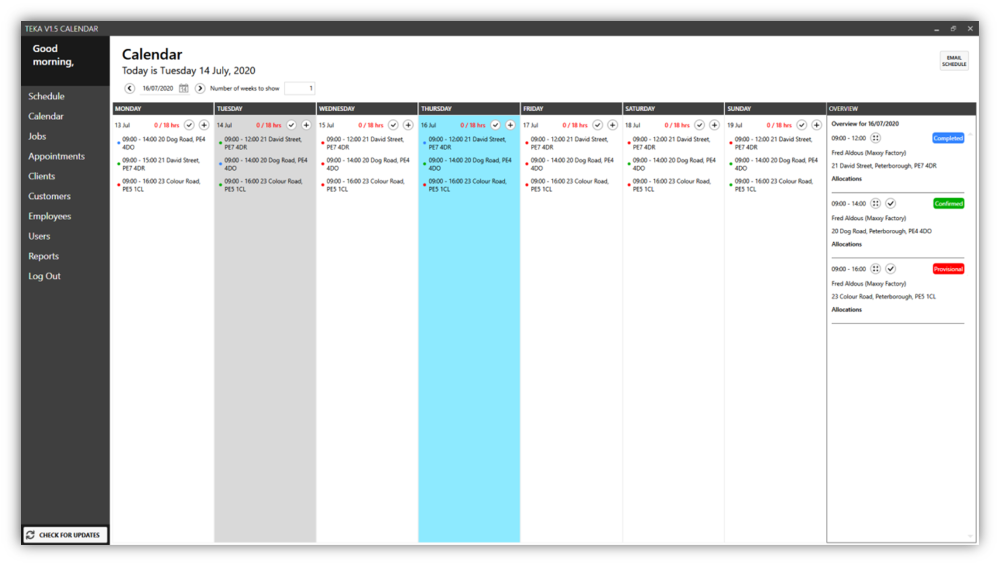
The drag and drop nature of the scheduler and the ability to visually see when cleaners were available, speeded up the procedure for scheduling work. All changes were reflected in the calendar view, enabling them to schedule the work daily and then switch to see a week overview.
Management were able to quickly get an overview of how much each job was making and the end of the month pay day became far less time consuming. The integrated user permission system ensured that users could only see what management wanted them too.